
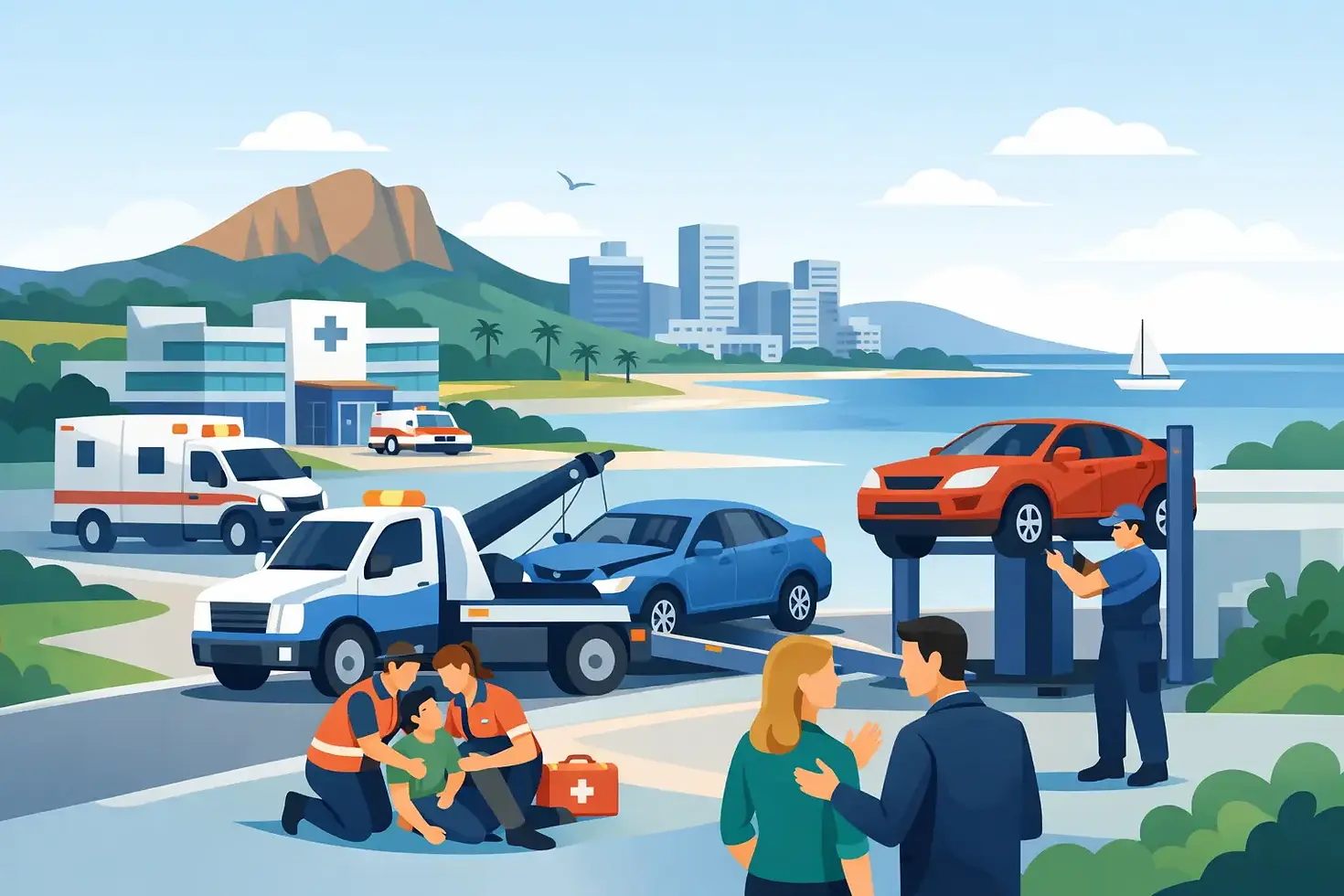
What Does Accident Recovery Include in Townsville?
A crash can leave a vehicle in the middle of traffic, off the shoulder, in a drain or somewhere far less accessible than a normal breakdown. So, what does accident recovery include? It is the work required to make the scene safer, recover the vehicle without causing further damage, and move it to the right destination.
For drivers, it can feel like one urgent phone call. Behind the scenes, the job may involve traffic risks, damaged wheels, leaking fluids, blocked access, police directions and the need for the right recovery equipment. Every incident is different, which is why proper accident recovery is more than simply hooking up a car and driving away.
What does accident recovery include?
Accident recovery generally starts with assessing the vehicle, its position and the immediate risks around it. The recovery operator needs to establish whether the vehicle can roll, whether the wheels are damaged or locked, whether there are fluids on the road, and whether it is safe to load where it sits.
The next step is securing the vehicle. This may involve using wheel straps, winching points, skates or other equipment suited to the vehicle’s condition. If a car, ute or 4WD has suspension damage, flat tyres, steering damage or panel damage, it cannot always be treated like a standard tow. The aim is to lift, winch or load it in a controlled way that avoids dragging it and making the damage worse.
Once secured, the vehicle is loaded onto the appropriate truck or recovered from its position. It is then transported to a repairer, a secure holding yard, a home address, a workplace or another location nominated by the owner, insurer or police. The exact destination depends on the circumstances and any instructions already in place.
Making the accident scene safer
The first priority at an accident scene is people. If anyone is injured, emergency services come first. Once occupants are safe and the relevant authorities have been contacted, recovery work can focus on the vehicle and the road environment.
A professional recovery operator assesses approaching traffic, road width, lighting, weather and the condition of the surface before starting. This matters on busy Townsville roads, regional highways and back roads alike. A vehicle stopped around a blind corner or partly across a lane needs a different approach from one parked safely on the verge.
Where conditions allow, the vehicle is prepared for removal without creating another hazard. That can include clearing loose debris around the vehicle, checking for fluid leaks, managing damaged parts that could shift during loading, and using visible warning measures while the truck is working. Recovery operators work alongside police, fire crews and roadside assistance providers when they are on scene.
Recovery does not replace emergency response or crash investigation. If police need the vehicle left in place, or emergency crews are still working, towing begins only when the scene is released for recovery.
Recovering a vehicle that cannot be driven
Many vehicles involved in a collision are not safe to drive, even when the damage appears minor. A bent steering component, damaged radiator, loose bumper, leaking coolant or deployed airbags can make driving risky. Trying to limp the vehicle home may turn a repairable issue into a larger repair bill.
A tilt tray is often the safest option for accident-damaged cars and light vehicles. The vehicle is winched onto the tray rather than driven up, then restrained for transport. This is particularly useful when tyres are flat, wheels will not turn properly, the gearbox is damaged, or the vehicle has struck a kerb, guardrail or another vehicle.
Not every recovery is straightforward. A vehicle may be nose-first in a ditch, stuck on soft ground, wedged against an obstacle or unable to be approached from the front. In these situations, the operator must choose safe attachment points and a recovery angle that protects the vehicle and prevents it from rolling or shifting unexpectedly. The quickest method is not always the right one.
For larger vehicles, machinery or loads involved in an incident, recovery planning can be more complex. Weight, load distribution, access for heavy equipment and the condition of the ground all affect the approach. A heavy recovery may require specialised transport capacity rather than a standard tow truck.
Towing and transport after the crash
Once the vehicle is loaded, accident recovery includes getting it where it needs to go. In many cases, that means a local smash repairer. It may also mean a mechanical workshop, a dealership, an insurer-approved repairer, a storage location or a private address.
It is worth confirming the destination before the truck leaves where possible. If your insurer has a preferred repairer, ask whether they want the vehicle delivered there or held until an assessor provides instructions. If the vehicle needs to be collected outside normal business hours, secure storage may be the practical option.
The right destination can save time later. Sending a badly damaged vehicle to a workshop that cannot assess it for several days may create unnecessary movement and extra handling. On the other hand, taking it directly to the nominated repairer can help get the repair process moving sooner.
For commercial operators, the transport requirement may go beyond the damaged vehicle. A tradesperson may need tools secured. A business may need to arrange movement of plant, equipment, a trailer or freight that was affected by the incident. These jobs need clear planning so the recovery is safe and the business can get back to work with minimal disruption.
What information helps when you call
Accident scenes can be stressful, but a few practical details help the recovery operator send the right truck and equipment. Your location is the most important detail. A road name, nearby cross street, kilometre marker, business name or recognisable landmark can make a real difference, especially after dark or outside town.
It also helps to explain the type of vehicle, whether it can roll, and where the damage is. Mention if the vehicle is off the road, in a ditch, on soft ground, towing a trailer or carrying a load. Let the operator know if police, fire or ambulance crews are on scene, and whether the road is blocked.
If you already know the intended destination, have that ready too. If you do not, say so. A capable operator can explain the practical options based on vehicle condition, timing and access. Do not stand in traffic or attempt to move a damaged vehicle yourself unless it is safe and authorities direct you to do so.
Accident recovery versus a standard breakdown tow
A standard breakdown tow is usually simpler. The vehicle may be parked safely, accessible from the road and mechanically unable to continue, but otherwise intact. Accident recovery often has more variables: damaged wheels, debris, traffic control, unstable ground, police coordination and restricted loading access.
That does not mean every crash needs a complicated recovery. A low-speed collision in a car park may only require a careful tilt-tray tow. The key difference is that the vehicle must be assessed before it is moved. Assumptions can damage driveline components, bodywork or undercarriage, particularly when the vehicle has struck something hard.
24/7 support when timing matters
Accidents do not wait for business hours. A crash on the way to an early shift, after a late trip home or on a regional run needs the same measured response as one in the middle of the day. Fast attendance matters, but safe handling matters just as much.
Elite 24hr Towing provides 24/7 accident recovery support for cars, utes, 4WDs and commercial vehicles, with transport capability for larger equipment and freight where required. From Townsville callouts to planned Queensland and interstate transport, the focus stays the same: get the load secured, get it moved safely and keep the job moving.
After an accident, the best next step is usually the simplest one: get yourself to a safe place, follow emergency service directions, and arrange recovery with an operator that has the equipment and experience for the condition of your vehicle.


Comments